
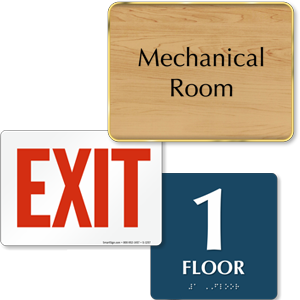
7 Types of Door Signs Every Professional Office Should Have for Maximum Impact
Introduction to Office Door Signs
In a bustling professional environment, the door sign is often the first interaction a client or employee has with a specific space. It is a silent greeter, a navigator, and a guardian of privacy. While often overlooked, high-quality office door signs are the subtle details that separate a chaotic workspace from a polished, professional enterprise.
Importance of Professional Door Signs
Signage does more than label a room; it communicates your company’s attention to detail. Faded, taped-on paper signs suggest a lack of permanence and care. Conversely, crisp, branded professional door signs made of acrylic, metal, or wood instill confidence in visitors and pride in employees. They reinforce your brand identity at every threshold.
Enhancing Workplace Navigation
Nothing frustrates a visitor more than wandering down identical hallways looking for a meeting room or a restroom. Strategic office door signage ideas reduce “wayfinding anxiety,” allowing guests to move through your space with autonomy and ease. Clear identification ensures that time is spent on business, not on getting lost.
Essential Types of Door Signs
To create a fully functional workspace, you need a mix of identification, compliance, and utility signs. Here are the seven essential types every US office needs.
-
Office Identification Signs
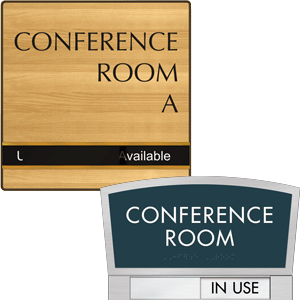
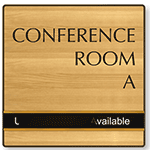
These are the foundational signs of any facility. Office identification signs permanently label rooms with numbers or standard functions (e.g., “Conference Room A,” “Room 204,” “Marketing Dept”).
- Best Practice: Keep the design consistent across the entire building. If the 2nd floor uses brushed aluminum, the 3rd floor should not switch to plastic.
- Placement: Typically mounted on the wall on the latch side of the door, 60 inches from the finished floor to the center of the sign.
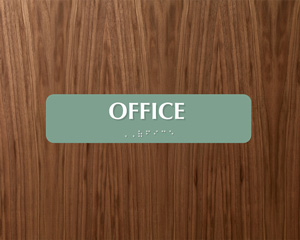
For most US offices, sticking to a Room Numbering System (e.g., 101, 102) is superior to using functional names (e.g., “HR Room”). Departments move and room functions change, but room numbers stay constant. This approach saves you money on re-signage in the long run.
-
Custom Office Name Plates
For private offices, office nameplates are vital. They give employees a sense of ownership over their space and help colleagues locate specific team members quickly.
- Flexibility: Modern systems allow for paper or digital inserts. This is crucial for businesses with high turnover or flexible seating arrangements.
- Material: Acrylic stand-offs or engraved metal plates are popular professional business signage choices that look sleek and modern.
When choosing these, insert-style holders with a metallic finish are often the best investment. They provide a premium look but allow you to print your own name inserts on clear film in-house. It is the most cost-effective way to handle staff changes without waiting weeks for a new engraving.
-
ADA Compliant Door Signs
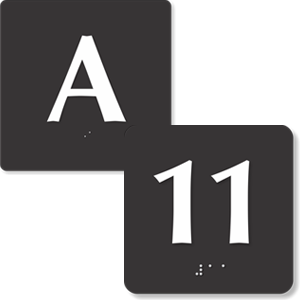
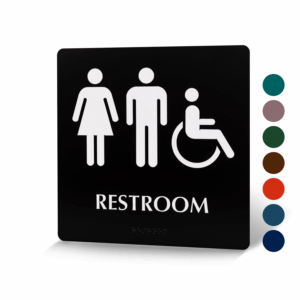
In the United States, accessibility is not just a courtesy; it is the law. ADA compliant signs must be installed for permanent rooms and spaces to ensure they are accessible to those with visual impairments.
 Key Requirements:
- Tactile Text: Raised characters (1/32 inch minimum) that can be read by touch.
- Braille: Grade 2 Braille located directly below the text.
- Contrast: High contrast between text and background (light on dark or dark on light).
Crucially, you should always choose a matte or non-glare finish for these signs. Glare makes signs hard to read for people with low vision and is a common reason for ADA inspection failures. Opting for “eggshell” or matte acrylics ensures you stay safe and compliant.
-
Meeting in Progress Signs
Interruption is the enemy of productivity. Meeting in progress signs are temporary or switchable indicators that signal when a room is in use for sensitive discussions or presentations.
- Varieties: These can range from simple door hangers to sophisticated LED-lit signs that glow red when a meeting is active.
- Impact: They prevent the awkward “door pop-in” that disrupts the flow of a meeting.
For a modern look that requires no wiring, sliding top-tab signs are an excellent choice. A simple tab slides left or right to reveal “In Use or Vacant.” They are mechanical, unbreakable, and require no batteries, making them a low-maintenance solution for busy offices.
-
Sliding Vacant Occupied Signs
Similar to “Meeting in Progress” signs but more functional for shared spaces like restrooms, lactation rooms, or phone booths. Sliding signs (often called slider signs) allow the user to manually toggle the status of the room.
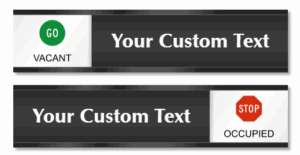
- Usage: The user slides the panel to reveal “Occupied” (usually in red) upon entering and “Vacant” (usually in green) upon leaving.
- Benefit: They eliminate the need to knock or jiggle the handle, preserving privacy and dignity.
When selecting these, ensure the “Occupied” section is Red and the “Vacant” section is Green. While custom brand colors are fun, these universal colors are instantly understood by everyone in the US, significantly reducing confusion and accidental entries.
-
Office Directory Signs
While technically a “lobby” sign, directory signs are frequently used on the doors of main suites in multi-tenant buildings. Office directory signs list the occupants or departments found within a specific wing or suite.
- Function: They act as the “Table of Contents” for your physical space.
- Design: Modular directory signs are best, as they allow you to swap out individual slats when a tenant moves.
A modular slat system is highly recommended over printing a single large graphic. With slats, if one tenant leaves, you only need to replace one small strip rather than the entire expensive sign, making it a budget-friendly option for long-term management.
-
Directional Door Signs
Sometimes the door itself needs to tell you where else to go. Directional door signs are often placed on doors in stairwells, lobbies, or long corridors to point the way toward key areas like “Restrooms,” “Exit,” or “Elevators.”
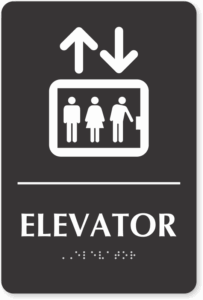
- Clarity: Use universally recognized symbols (arrows, icons) to make these signs understood at a glance, regardless of language barriers.
These should be placed at eye level (roughly 60 inches high) at every decision point, such as T-intersections in hallways. If a visitor has to stop and look around, that is exactly where a directional sign belongs.
Incorporating Personalization
Benefits of Personalized Office Signs
Personalized office signs do more than direct traffic; they build culture. When an employee sees their name professionally engraved on their door, it validates their role in the company. It transforms a “cubicle” into an “office.”
Custom Door Sign Ideas
- The “Fun” Title: For creative agencies, consider adding a fun subtitle under the formal role (e.g., “Jane Doe: Head of Marketing & Office DJ”).
- Brand Colors: Don’t settle for generic gray. Use custom door signs that match your brand’s specific Pantone colors to create a cohesive visual experience.
Conclusion
Maximizing the Impact of Door Signage
Investing in the right mix of office door signs, from mandatory ADA compliant door signs to functional sliding vacant occupied signs, yields high returns in efficiency and aesthetics.
By ensuring your signage is clear, consistent, and on-brand, you create an environment that respects the time of your visitors and the privacy of your employees. Whether you are outfitting a new build or refreshing an old office, remember that the sign on the door sets the expectation for what lies behind it.
Ready to upgrade your office navigation? Browse our collection of professional door signs today to find the perfect match for your workspace.
Category: Office courtesy, Restrooms